
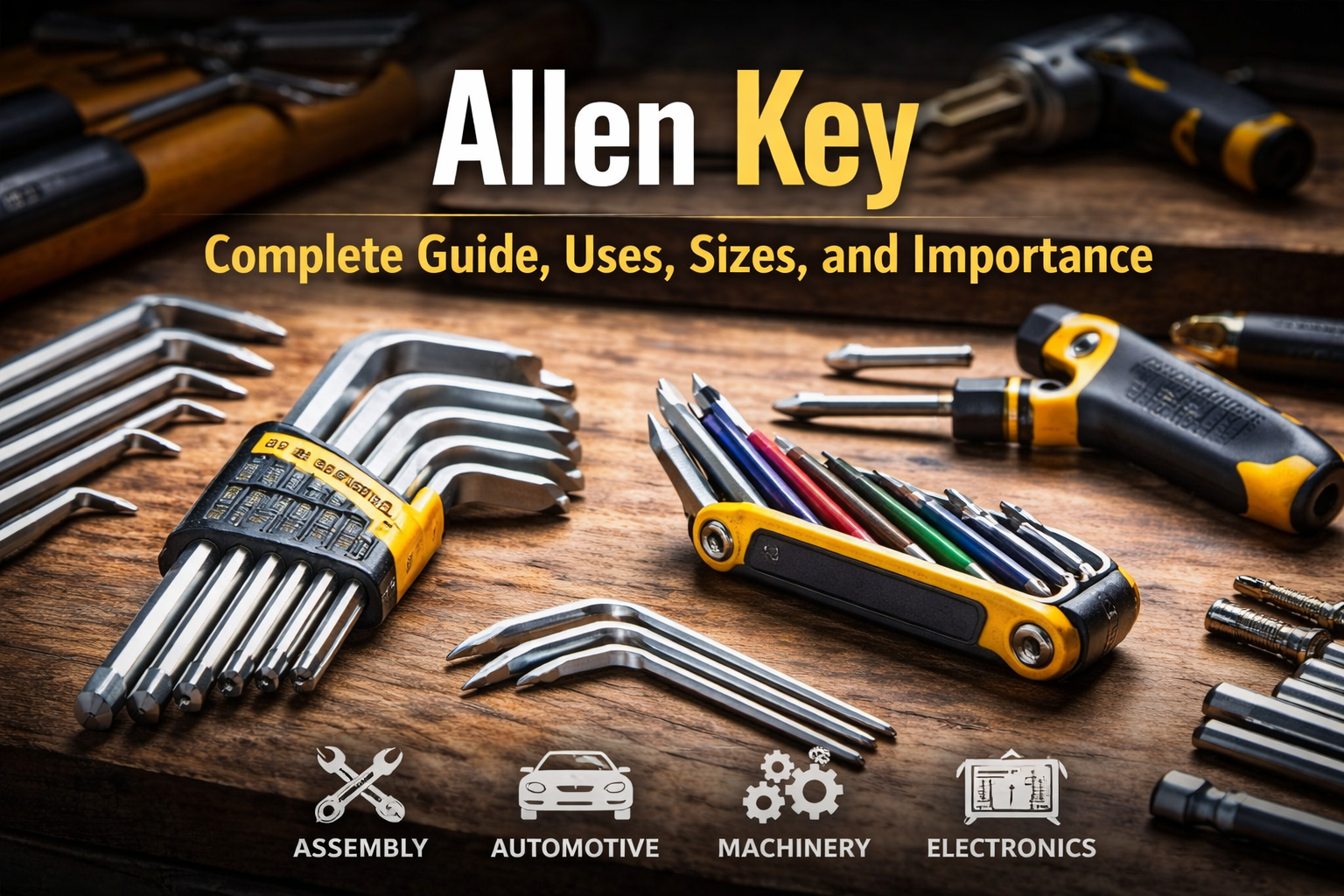

The keyword allen key is something almost everyone has come across at some point, even if they didn’t know its exact name. Think about the last time you assembled furniture, tightened a loose screw, or worked on a bicycle—chances are, you used one. This small, simple tool has become a must-have in households, workshops, and industries around the world. Despite its size, it plays a massive role in modern construction and assembly tasks.
What makes it so interesting is how something so basic can be so effective. It doesn’t have moving parts, it doesn’t look complex, yet it solves problems that many other tools struggle with. The beauty of this tool lies in its simplicity and efficiency. Whether you’re a DIY enthusiast or a professional mechanic, understanding how it works can save you time, effort, and frustration.
Why Allen Key Is So Popular
The popularity of the allen key comes from its versatility and ease of use. It fits perfectly into hexagonal screws, providing a secure grip that reduces slipping. This makes it ideal for tasks that require precision and control.
Another reason behind its widespread use is its compact design. Unlike bulky tools, it can fit into tight spaces where other tools simply can’t reach. This makes it indispensable for assembling furniture, repairing bikes, and working on machinery. It’s one of those tools that quietly does its job without demanding attention, yet you’d immediately notice if it wasn’t there.
What Is an Allen Key
Definition and Shape
An allen key is a simple hand tool used to drive bolts and screws with hexagonal sockets. It is typically L-shaped, allowing users to apply torque at different angles. One end is usually longer for reaching deep screws, while the shorter end provides more leverage.
This unique shape is what makes it so effective. The hexagonal design ensures a snug fit, reducing the chances of slipping or damaging the screw head. It’s a perfect example of how design and functionality can work together seamlessly.
Why It Is Called Allen Key
The term allen key comes from the Allen Manufacturing Company, which popularized this tool in the early 20th century. Over time, the name became generic, much like how some brand names become associated with entire product categories.
Interestingly, in many parts of the world, it’s also referred to as a “hex key” or “hex wrench.” Regardless of the name, the function remains the same—tightening and loosening hexagonal screws with precision and ease.
History of Allen Key
Origin and Development
The history of the allen key dates back to the early 1900s when industries were looking for safer and more efficient fastening solutions. Traditional screws often required tools that could slip easily, leading to injuries and inefficiencies.
The introduction of the hexagonal socket design revolutionized fastening systems. It provided a secure grip and allowed for better torque application. This innovation quickly gained popularity in manufacturing and engineering sectors.
Evolution in Modern Tools
Over time, the allen key evolved to meet modern demands. Today, you’ll find it in various forms, including foldable sets, T-handle versions, and even power tool attachments. Despite these advancements, the basic design remains unchanged, proving its effectiveness.
Types of Allen Key
L-Shaped Allen Key
The most common type of allen key is the L-shaped version. It’s simple, affordable, and widely available. Its design allows for both reach and leverage, making it suitable for a variety of tasks.
T-Handle Allen Key
The T-handle allen key offers better grip and torque. It’s often used in professional settings where more force is required. The handle provides comfort and reduces hand fatigue during extended use.
Folding Allen Key Set
A folding allen key set is perfect for portability. It combines multiple sizes into one compact tool, making it ideal for on-the-go repairs and adjustments.
Allen Key Sizes and Standards
Metric vs Imperial Sizes
One important aspect of the allen key is its size variation. There are two main standards: metric and imperial. Metric sizes are commonly used in most parts of the world, while imperial sizes are more common in the United States.
Size Chart and Uses
| Size Type | Common Sizes | Typical Uses |
|---|---|---|
| Metric | 1.5mm–10mm | Furniture, electronics |
| Imperial | 1/16–3/8 inch | Automotive, machinery |
Choosing the correct size is crucial. Using the wrong size can strip the screw and make removal difficult.
Uses of Allen Key
Furniture Assembly
One of the most common uses of the allen key is assembling furniture. Many flat-pack furniture kits include this tool because it’s easy to use and requires no additional equipment.
Automotive Applications
In the automotive world, the allen key is used for tightening bolts in engines, brakes, and other components. Its precision makes it ideal for delicate parts.
Electronics and Machinery
From laptops to industrial machines, the allen key plays a vital role in assembly and maintenance. Its ability to fit into small spaces makes it indispensable.
Advantages of Allen Key
Compact Design
The compact design of the allen key makes it easy to carry and store. It doesn’t take up much space, yet it can handle a wide range of tasks.
High Torque Efficiency
Another major advantage is its ability to apply high torque without slipping. This ensures that screws are tightened securely and safely.
Common Problems and Solutions
Stripped Screws
One common issue with the allen key is stripped screws. This usually happens when the wrong size is used or too much force is applied.
Wrong Size Issues
Using the wrong size can damage both the tool and the screw. Always ensure you’re using the correct size for the job.
Tips for Using Allen Key
Proper Technique
Using an allen key correctly involves inserting it fully into the screw and applying steady pressure. Avoid sudden force, as it can cause slipping.
Maintenance Tips
Keep your allen key clean and store it properly. This ensures longevity and consistent performance.
Conclusion
The allen key may look like a simple tool, but its impact is undeniable. From assembling furniture to maintaining complex machinery, it plays a crucial role in everyday tasks. Its simplicity, efficiency, and versatility make it a must-have tool for anyone, whether you’re a beginner or a professional.
FAQs About Allen Key
What is an allen key used for?
It is used to tighten and loosen hexagonal screws and bolts.
Why is it called an allen key?
It was named after the Allen Manufacturing Company.
What are the common sizes of allen key?
They range from small metric sizes like 1.5mm to larger ones like 10mm.
Can allen key be used for all screws?
No, it only works with hexagonal socket screws.
Is allen key better than a screwdriver?
It depends on the screw type, but for hex screws, it is more efficient.